

Vacuum Graphitization Furnace Successfully Shipped
Release time:
2025-05-27
Author:
Source:
Abstract
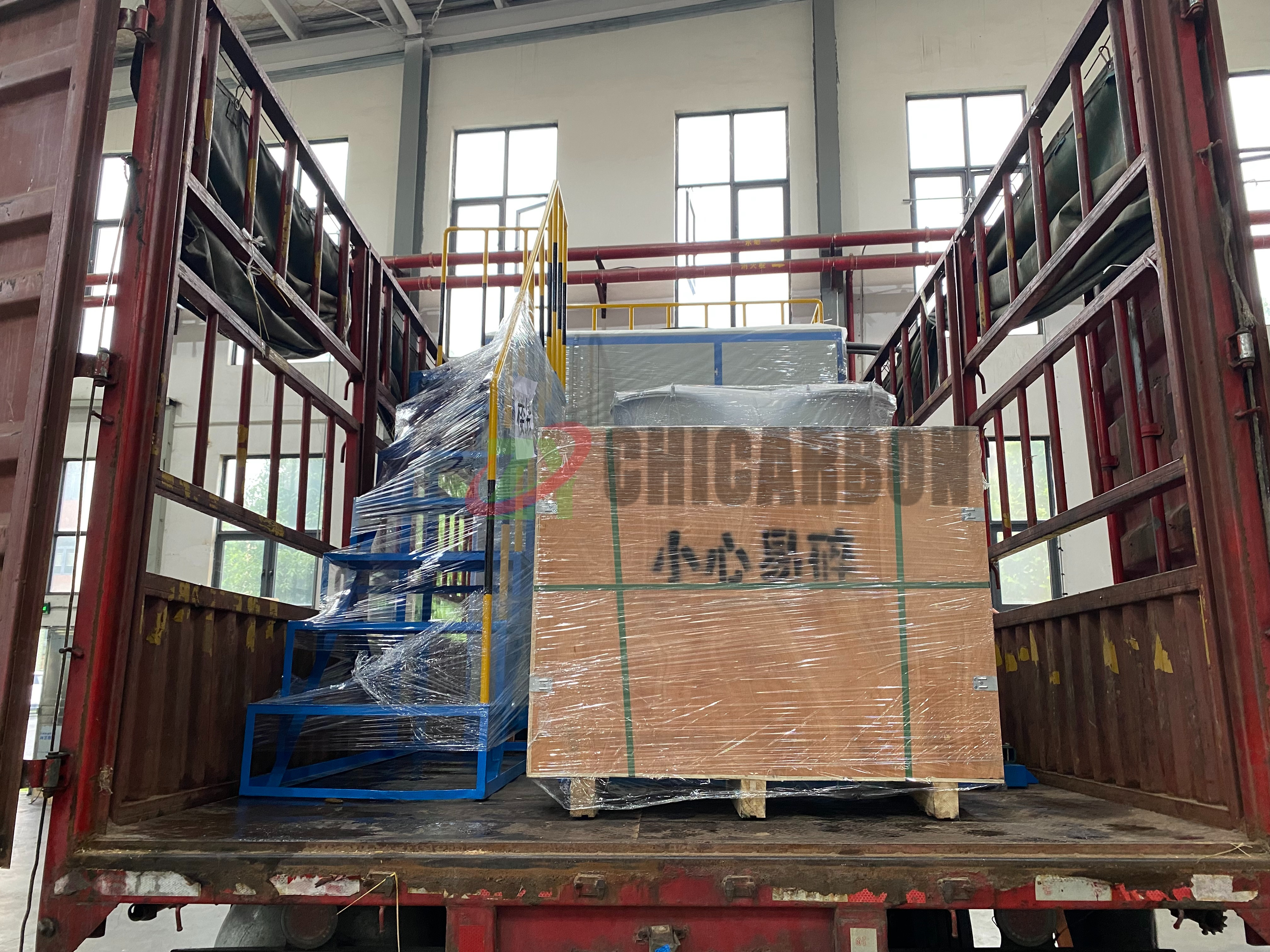
After careful inspection and packing by the staff before shipment, the vacuum graphitization furnace was successfully shipped. The vacuum graphitization furnace in this shipment is equipped with an intelligent temperature control system, which can achieve uniform graphitization of materials at a high temperature of 3,000°C. It is widely used in high-end fields such as lithium anode materials and semiconductors.

Recommended Reading
Silicon nitride (Si₃N₄) ceramics offer exceptional strength, fracture toughness, and thermal shock resistance, but their sintering process faces three major challenges: difficult densification, uncontrolled grain boundary phases, and cracking caused by residual thermal stress.
This article explains how a vacuum hot press furnace overcomes each of these obstacles:
Densification – Applied mechanical pressure (30–100 MPa) significantly lowers sintering activation energy, enabling near-theoretical density (>99%) at 1700–1750°C.
Grain boundary control – Vacuum environment and post-sinter annealing allow in-situ crystallization of the glassy phase, transforming it from a high-temperature weakness into a stable, heat-resistant structure.
Cracking prevention – Programmed stepwise pressure release and controlled slow cooling rates minimize thermal gradients, eliminating residual stress‑induced fractures.
2026-06-05
This article systematically elucidates the graphitization and carbonization processes of graphite anode materials, as well as the sintering process of next-generation silicon-carbon composite anode materials. Combining the technical advantages of high-performance vacuum atmosphere sintering furnaces, it explores how to achieve stable preparation of high-performance anode materials by precisely controlling key parameters such as vacuum degree, atmosphere, and temperature curves.
2026-05-25