

Introducing the Advantages of Zhuzhou Chi Carbon Automation High Temperature Sintering Furnace Manufacturer!
Release time:
2025-02-27
Author:
Source:
Abstract
High temperature sintering furnace manufacturers tell you that the intention and meaning of sintering is to prepare high-quality metallurgical charge. Now it has gradually evolved into a way of resource use, from simple sintering pelletology to the development of the integrated use of complex ores, electric furnaces, direct restoration of the short process and sintering pelletology expert system. What's more, ultra high temperature sintering furnace enables bonding between solid particles in raw ceramic billets.
Selected microwave high-temperature furnace sintering large red and blue porcelain, can significantly improve the product yield, shorten the firing time, energy savings. Microwave high-temperature furnace can sinter a variety of oxide ceramics, nitride ceramics, carbide ceramics and complex phase ceramic materials. Powder metallurgy materials: Cemented carbide in the microwave high-temperature furnace has completed large-scale industrial production.
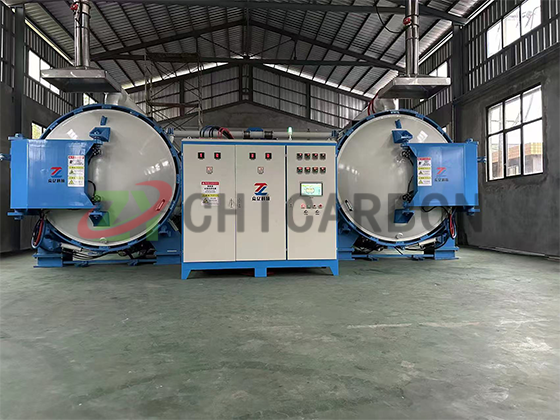
Make its grain growth, open space (pore) and grain boundaries gradually reduce, after the material transfer to make its volume shrink, density increase, and finally form a fine polycrystalline sintered body with a certain microstructure. Ceramic materials: the choice of microwave high-temperature furnace for a variety of white porcelain, white porcelain, thin porcelain, ashes porcelain sintering. The cost is more than half of the traditional gas sintering furnace or oil sintering furnace, and the product qualification rate progresses.
Due to the fast sintering speed, the carbide grain is fine, can greatly improve the product function. A variety of tungsten alloy sintered in microwave high temperature furnace, a variety of iron-based and copper-based powder metallurgy parts sintered in microwave high temperature furnace. Selected microwave high-temperature furnace sintering nickel-zinc soft magnetic ferrite material, different grades of manganese-zinc soft magnetic ferrite material in the microwave high-temperature furnace sintering, its frequency characteristic curve compared with the traditional sintering furnace, in the same proportion, its high-frequency characteristics have been significantly improved.
Recommended Reading
Zhuzhou Chi Carbon Automation Equipment Co., Ltd
1
Email: Chitanfurnace1@gmail.com
chitanauto@163.com
Address:
Building 4, Phase 2.5, Independent Entrepreneurship Park, Tianyi Science and Technology City, Tianyuan District, Zhuzhou City, Hunan Province, China
Mr. Gong +86 13975355803
Janet +86 15307333989


